

Vietnam AI Stars 2026
Accelerating Vietnamese Startups



Round 1 Submission

Bridging the Gap to Global Startup Readiness

Vietnam AI Stars (VAS) empowers Vietnamese AI talents to build investment-ready startups. Leveraging our global network and Silicon Valley expertise, VAS equips founders with the knowledge, skills, and mindset needed to compete on the world stage — from developing robust prototypes to achieving investor readiness.
What truly sets us apart is our community. Beyond training and mentorship, VAS connects entrepreneurs with a powerful network of accomplished Vietnamese in tech — previous generations who collaborate to lift up the next. As the saying goes, “It takes a village to raise a child.” At VAS, that village is our unique strength, fostering collaboration, creativity, and shared success.
Our mission is to cultivate a vibrant ecosystem where Vietnamese innovation can thrive, and to bridge the gap for Vietnamese founders striving for global startup readiness.




Build Vietnam’s AI Future. Together.
Who Can Participate?

Eligibility Criteria
Open to Vietnamese
origin candidates around
the world, having
passion about using Al to
create meaningful value
and impact.

Team Composition
A team can consist from 1
up to 5 members with at
least 1 Vietnamese.
Teams may represent
startups, university
groups, or independent professionals.

Travel Notice
However, please note
that Final Round
presentations will take
place on stage in Silicon
Valley. The finalist
teams are responsible for their own visa
applications and travel
arrangements.
Judges




Format, Timeline and Scoring Criteria


Purpose: Filter and identify the 10 most promising AI projects from the pool of applicants, based on the quality of their idea, technical implementation, and the business impact.
Timeline: Feb 2026 (Launch) – March 15, 2026 (Submission Deadline).
Submission Requirements (Round 1): By March 15, 2026, teams must submit a complete application package through Vietnam AI Stars website (in English). The package includes:
1. Pitching Deck
A slide deck (PDF format, 10–15 slides recommended, max 20) outlining the project in depth. It should be structured like a professional pitch deck and cover:
- Problem Statement & Importance: What specific problem or need in Vietnam does the project address? Who are the beneficiaries or target users? Provide context or any relevant stats.
- Solution Overview: What is the AI-based solution? Describe the product or prototype and how it works at a high level. Include any unique innovation in algorithms or approach.
- Technical Implementation: Describe the AI technologies used (e.g. machine learning model type, data sources, architecture). Highlight any technical results (accuracy, performance metrics) or demo screenshots.
- Impact & Potential: How will this solution improve economic growth or quality of life? What is the potential scale of impact (e.g. number of people affected, cost savings, efficiency gains)?
- Feasibility & Plan: Explain how you plan to develop and deploy the solution in Vietnam. Mention current project status (prototype, MVP) and next steps. Address feasibility: do you have access to necessary data, expertise, partnerships?
- Team Strength: Introduce the team’s capabilities – why is this team suited to build and implement this project (experience in AI or the domain)?
- (Optional) Market or Sustainability: If relevant, outline the business model or sustainability plan (especially if it’s a startup idea). How might it continue after the competition, any potential customers or investors?
- The deck may include diagrams, charts, or visuals. Keep text concise and font readable. Slides must be in English. Ensure the deck is well-structured and clearly conveys the story of the project.
2. Pitching Video (optional)
- A video of the team pitching the project, 3 minutes max. This is a verbal presentation of the highlights of your project (like an elevator pitch combined with key slides or prototype glimpses). It should cover the problem, solution, why it’s innovative, and what impact it can have – essentially a condensed version of the deck in a compelling narrative. The video can feature team members speaking, slides, and/or a brief demo clip. English subtitles or voice-over required if spoken language is not English.
- Video format: YouTube/Vimeo link, ensuring that anyone with the link can view your video
3. Demo Video (optional)
- A separate video (up to 5 minutes) focusing on the functional demo of the AI solution. Show the prototype or system in action: for example, screen recordings of software, footage of a device working, or step-by-step usage demonstration.
- The goal is to convince judges that a working proof-of-concept exists (or at least a simulation if the full system is not built). Include narration or text to explain what’s happening.
- If the pitch video already contains a full demo, this can be an extended technical demonstration.
- Video format: YouTube/Vimeo link, ensuring that anyone with the link can view your video
All submission materials should be uploaded by the deadline via website https://vietnamaistars.com/. Late or incomplete submissions will not be accepted (unless there are extenuating circumstances and the organizers announce an extension). Each team must ensure all files are accessible (correct links, proper file formats). The organizers will keep submissions confidential and only share with judges.
All registered teams/individuals submit required materials (credentials, project deck, videos, etc.). Four independent judges score each project; the Top 10 teams advance to Semi-Finals.
Eligibility & Team Composition
- Open to Vietnamese individuals or teams of up to 3 members. (Each team can be 1–3 people.) Teams may represent startups, university groups, or independent professionals.
- Projects must address a problem/opportunity relevant to Vietnam (economic development or quality of life). At least one team member should be proficient in English for presentation purposes.
- Each individual/team may submit only one project. Projects must be original work of the team – plagiarism or submission of others’ work will lead to disqualification.
- There is no restriction on project stage; both newly developed prototypes and ongoing projects are allowed, as long as the work is primarily that of the team and not a fully commercialized product yet. (If using existing open-source components or pre-trained models, disclose and focus on your team’s contributions.)
Submission Requirements: Package must be submitted in English through Vietnam AI Stars website, including:
1. Team Credentials & Project Summary
A PDF document (or online form) with team information and a project overview. This includes:
- Team name, member names, affiliations (university, company, etc.), and brief bios (roles & expertise).
- Contact email and phone for a team lead.
- 150-word project summary describing the problem being solved, the AI solution, and its impact for Vietnam.
- Confirmation of adherence to rules (e.g. originality of work, willingness to travel to Finals if selected).
2. Detailed Presentation Deck
A slide deck (PDF format, 10–15 slides recommended, max 20) outlining the project in depth. It should be structured like a professional pitch deck and cover:
- Problem Statement & Importance: What specific problem or need in Vietnam does the project address? Who are the beneficiaries or target users? Provide context or any relevant stats.
- Solution Overview: What is the AI-based solution? Describe the product or prototype and how it works at a high level. Include any unique innovation in algorithms or approach.
- Technical Implementation: Describe the AI technologies used (e.g. machine learning model type, data sources, architecture). Highlight any technical results (accuracy, performance metrics) or demo screenshots.
- Impact & Potential: How will this solution improve economic growth or quality of life? What is the potential scale of impact (e.g. number of people affected, cost savings, efficiency gains)?
- Feasibility & Plan: Explain how you plan to develop and deploy the solution in Vietnam. Mention current project status (prototype, MVP) and next steps. Address feasibility: do you have access to necessary data, expertise, partnerships?
- Team Strength: Introduce the team’s capabilities – why is this team suited to build and implement this project (experience in AI or the domain)?
- (Optional) Market or Sustainability: If relevant, outline the business model or sustainability plan (especially if it’s a startup idea). How might it continue after the competition, any potential customers or investors?
- The deck may include diagrams, charts, or visuals. Keep text concise and font readable. Slides must be in English. Ensure the deck is well-structured and clearly conveys the story of the project.
3. Pitching Video
- A video of the team pitching the project, 3 minutes max. This is a verbal presentation of the highlights of your project (like an elevator pitch combined with key slides or prototype glimpses). It should cover the problem, solution, why it’s innovative, and what impact it can have – essentially a condensed version of the deck in a compelling narrative. The video can feature team members speaking, slides, and/or a brief demo clip. English subtitles or voice-over required if spoken language is not English.
- Video format: YouTube/Vimeo link, ensuring that anyone with the link can view your video
4. Demo Video
- A separate video (up to 5 minutes) focusing on the functional demo of the AI solution. Show the prototype or system in action: for example, screen recordings of software, footage of a device working, or step-by-step usage demonstration.
- The goal is to convince judges that a working proof-of-concept exists (or at least a simulation if the full system is not built). Include narration or text to explain what’s happening.
- If the pitch video already contains a full demo, this can be an extended technical demonstration.
- Video format: YouTube/Vimeo link, ensuring that anyone with the link can view your video
5. Additional Materials
- Documentation: Any technical documentation or paper describing the methodology (optional but encouraged if research-heavy).
- Code or Repository Link: e.g. a GitHub repository link or similar, if the team is willing to share code or a portion of it for review. (Not mandatory, but can strengthen technical credibility.)
- References: If the idea or prototype has been presented before or has any media coverage, include references or links. Also cite any external datasets, libraries, or prior work used.
- Team Photo: A team photograph (for publicity if selected to next rounds)
Top 10 teams deliver a live online presentation and demo to a panel of judges with Q&A. Judges score projects based on criteria and performance; the Top 3 teams advance to the Finals.
Format
- The Semi-Final will be conducted via an online video conference (e.g. Zoom or a similar platform), open to judges and possibly a public audience (for transparency and engagement). Each of the 10 teams will join the session during their allotted slot. The structure for each team’s session: 10 minutes presentation + 5 minutes live demo + 5-10 minutes Q&A with judges.
- Teams should prepare a live presentation (you can use an updated slide deck from Round 1, incorporating any improvements or judge feedback). Aim for ~10 minutes to pitch the project, emphasizing key points (problem, solution, impact, progress).
- This is followed by up to 5 minutes of live demo. Teams are expected to show their application or prototype live (screen sharing the application, or showing a pre-recorded demo if live demo is risky). This allows judges to see current functionality and perhaps ask the team to perform specific actions to validate the tech.
- Finally, 5-10 minutes of Q&A, where judges will ask probing questions. Judges may ask about technical details, business strategy, implementation challenges, or anything needing clarification.
- Teams must be ready to think on their feet and provide clear answers. The Q&A tests depth of knowledge and how well the team has considered various aspects of their project.
Submission/Preparation Requirements
- Updated Slide Deck: Teams can update their presentation from Round 1 based on feedback and re-submit through the website for Round 2. This deck can be more fine-tuned and can include new developments (e.g. new results, improved demo screenshots, pilot test data, etc.). It must still be submitted in advance (by a deadline a few days before the semi-final event) to organizers for smooth screen-sharing or as backup. The slide limit remains ~15 slides (teams should focus on clarity and impact).
- Live Demo Setup: Teams should ensure their tech environment is ready for screen sharing. If the project is a software, have it running locally or on a server to demonstrate. If it’s hardware, have videos or live webcam feed to show it.
- Presentation Skills: Teams are encouraged to practice their timing. Speaking clearly and within the 10-minute slot is crucial. Organizers will share tips or a coaching webinar on how to make an effective pitch and handle Q&A.
- Backup Video: As a fail-safe, teams may submit a backup video of their intended presentation or demo. This would only be used if live technical difficulties occur (e.g. network outage).
Top 3 teams present on stage in Silicon Valley before a high-profile judging panel and live audience. Judges score final presentations to determine the Champion, 1st Runner-up, and 2nd Runner-up.
Format
Each of the 3 finalist teams will deliver an on-stage presentation on Aug 23, 2025 and live demo, followed by Q&A from an expert judge panel. The suggested format for each team at Finals: – 15-minute Stage
Venue
Computer History Museum, 1401 N Shoreline Blvd, Mountain View, CA 94043, USA
Presentation
A polished pitch telling the story of the project from inception to future plans. (Teams will have rehearsed to deliver a compelling narrative.) They can use slides and multimedia, and even include a short video or live demo within this time. Emphasis on vision and impact, as well as progress made since semi-finals.
5-minute Intensive Q&A
High-profile judges (and possibly one or two questions from the audience) will quiz the team. At this stage, questions may focus on scalability, go-to-market strategy, investment needs, or technical robustness for deployment.
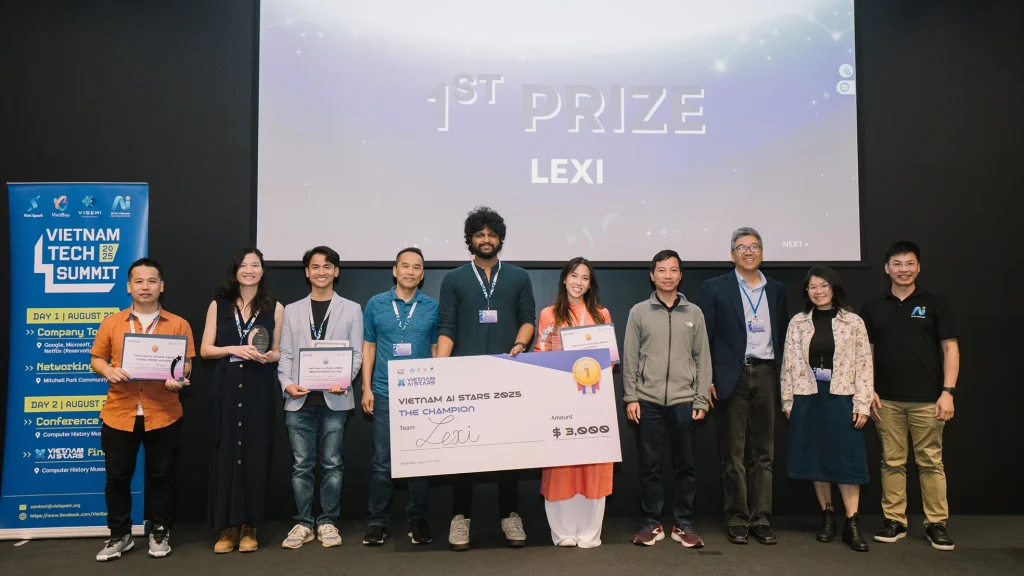
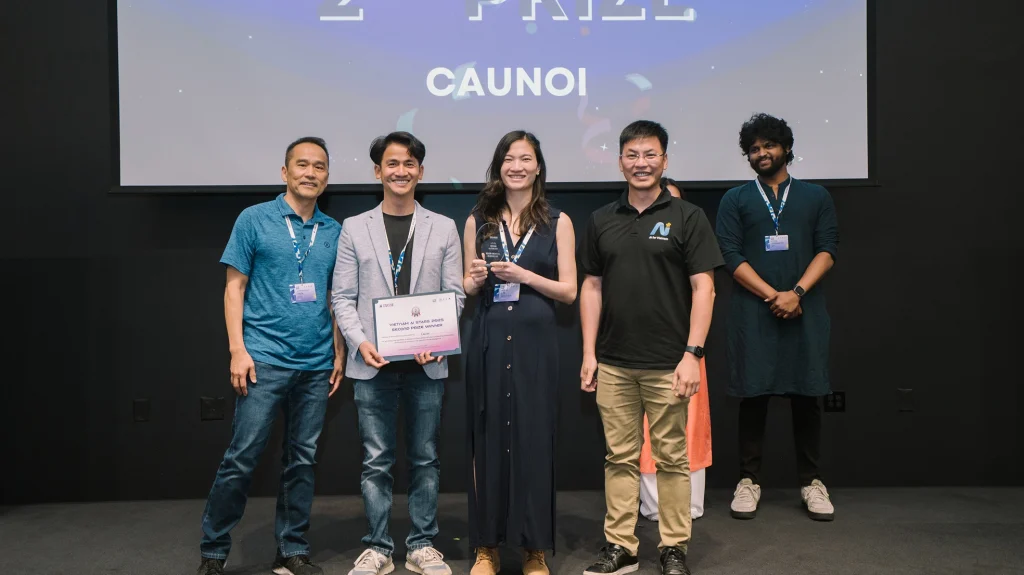
Finally, the awards ceremony: Judges return to announce the results – Champion, 1st Runner-up, 2nd Runner-up – and present prizes.
Preparation & Support for Finalists
- After Semi-Finals until the final event, the 3 finalist teams undergo an intensive 3-week mentorship and coaching program with several AI Experts, Industry Professionals, Subject Matter Advisors, Pitch Coaches. They will refine all aspects of their project and presentation. Specific preparation steps for the final include:
- Teams must update their pitch deck into a 15-minute presentation. They should incorporate any new developments (maybe they improved their prototype or conducted a pilot in the interim) and craft a strong narrative about the problem, solution, impact, and future roadmap.
- Each team should also prepare a live demo or product showcase for the stage. If it’s software, possibly a live demo; if hardware or if live demo is risky, a high-quality demo video embedded in the presentation.
- A day before the final event (Aug 22, 2025), the teams will have an in-person rehearsal at the venue. They can practice on stage, test their slides on the AV system, and adjust for stage timing. Coaches/mentors will be present to give last-minute feedback. There will also be a briefing on stage etiquette and use of microphones, etc.
- The organizers may also host a networking dinner or welcome event for the teams when they arrive, allowing them to meet judges, mentors, and local tech community members in a casual setting.
Our Mentoring Program
Our Engagement Model



Vietnam AI Stars 2025
10
Sectors
16
Contries
40
Mentoring Sessions
85k
Online Views
Submission Form